
Isolation affects brain health. Here is how AlestaCare addresses it every day.
When families call AlestaCare, the conversation often starts with practical concerns: help with meals, medication reminders, getting to appointments. Those things matter, and we do all of them. But one of the most important things we provide is something harder to put on a checklist: genuine human connection.
That is also one of the supporting blocks behind AlestaLiving, AlestaCare’s approach to brain and heart health built into every visit. Social connection is not a peripheral service. It is part of the care itself.
Isolation Affects Brain Health
Research shows that physical activity, mental stimulation, social engagement, and nutrition can significantly reduce the risk of Alzheimer’s and other dementias. Social engagement is one of these key areas, and AlestaCare takes it seriously. Isolation is not just an emotional concern. It is a health concern.
What Social Connection Looks Like in Daily Care
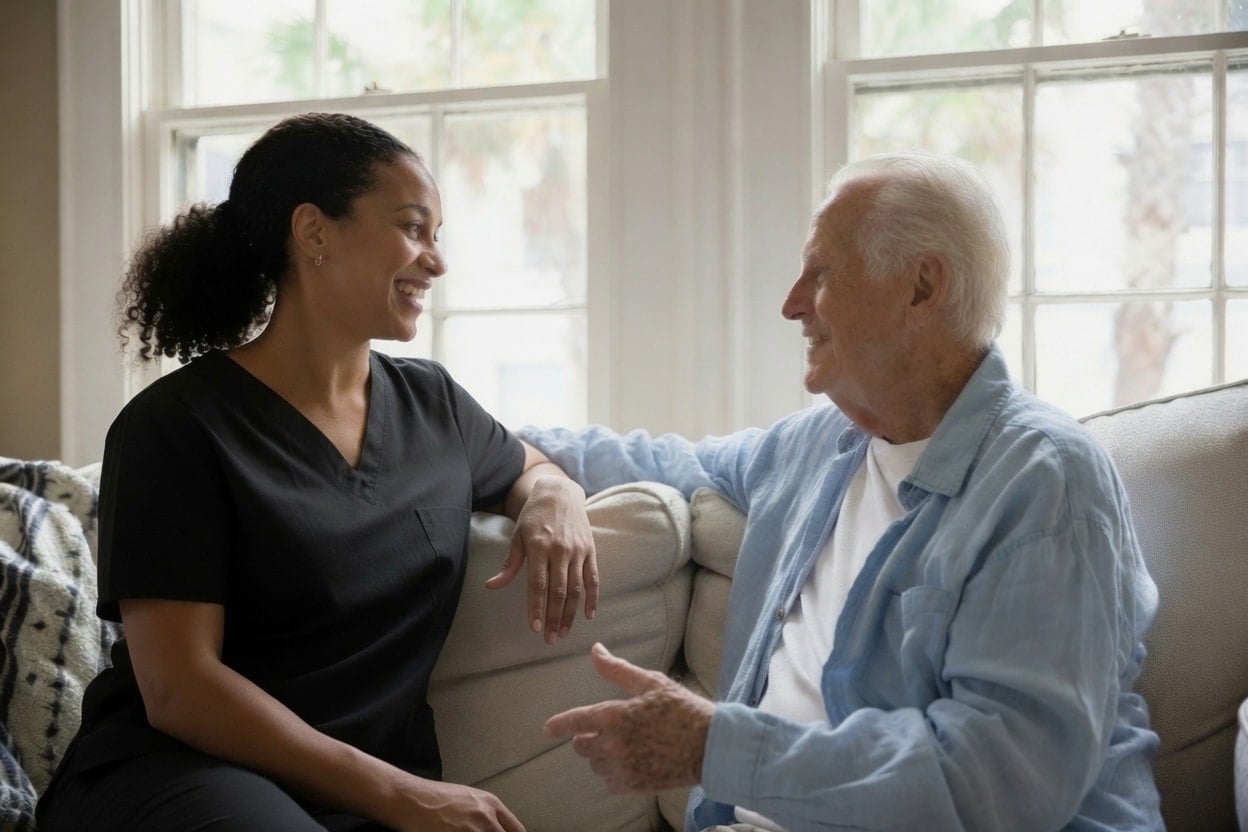
By being present, engaging in genuine conversation, and encouraging participation in activities your loved one enjoys, our caregivers help combat loneliness. We are not just completing tasks. We are building relationships.
In practice, that means meaningful conversation and active listening, encouragement and assistance with hobbies and favorite pastimes, support for community involvement and social visits, and help with phones, tablets, and computers to maintain family and social connections. These are not extras. They are just part of what we do.
Presence and Connection Are Not the Same Thing
Having someone in the room is not the same as having someone genuinely present. AlestaCare caregivers are trained to engage with real attention, to find out what a person finds important, what they enjoy discussing, what activities bring them alive, and to bring those things into every visit. That quality of connection is part of the care, not separate from it.
Part of a Connected Approach
Social connection works alongside physical activity, mental stimulation, and nutrition as part of AlestaLiving. A shared activity, a real conversation, a supported outing: these moments do more than one thing at once. That is how brain health gets built into a day rather than added on top of it.
Ready to talk through what you’re seeing? Call AlestaCare at (843) 800-2332 or schedule a free consultation at alestacare.com. We’re here when you’re ready.
Are you a care professional or community connector? If you work with seniors or families in the Charleston area, we’d welcome the opportunity to introduce ourselves. AlestaCare accepts referrals from physicians, discharge planners, social workers, senior living communities, and community organizations, among others. Call us or contact us to start a relationship.